


Press release
Bio-Based Levulinic Acid Market Expected to Expand at a Steady CAGR through 2020

Segetis are constructing a new toll manufacturing plant for their new ketals chemistry in the Midwest and the construction of which was expected to be completed by the end of 2011. Products entering the market would start with solvents. While polyols is expected to be the last to enter in the market because of significant functional testing required. At present China is the supplier of the levulinic acid from the company but later it may use residue of wood as a feedstock.
Request for sample report: http://www.futuremarketinsights.com/reports/sample/rep-gb-227
The potential outcome by the development of bio based levulinic acid could be the replacement of the phthalate plasticizers which is used to make Polyvinyl chloride (PVC) which is the most widely produce plastic and other plastics flexible. The company is also working directly to replace the phthalate which concerns about exposure to children. The major advantages of ketal monomers are that they attach to the PVC molecule firmly and are of natural origins.
Major opportunity for the market can be obtain from the manufacture of polyols which combines with iscoyanates to produce polyurethane. The polyols which are made from bio based levulinic acid will have rigidity which in turn will help to reduce the level of iscoyanates while obtaining polyurethane having similar properties and the monomers will play the role of the performer. The cost of polyols produce by the company will be same as made from petroleum resources. But it is expected that it will help to improve the economics for formulators due to less use of iscoyanates. The major advantage for the ketals chemistry is from its total cost.
Request for TOC: http://www.futuremarketinsights.com/toc/rep-gb-227
This research report presents a comprehensive assessment of the market and contains thoughtful insights, facts, historical data and statistically-supported and industry-validated market data and projections with a suitable set of assumptions and methodology. It provides analysis and information by categories such as market segments, regions, product type and distribution channels.
About us:
Future Market Insights (FMI) is a leading market intelligence and consulting firm. We deliver syndicated research reports, custom research reports and consulting services, which are personalized in nature. FMI delivers a complete packaged solution, which combines current market intelligence, statistical anecdotes, technology inputs, valuable growth insights, an aerial view of the competitive framework, and future market trends.
616 Corporate Way, Suite 2-9018,
Valley Cottage, NY 10989,
United States
T: +1-347-918-3531
F: +1-845-579-5705
T (UK): + 44 (0) 20 7692 8790
Email:sales@futuremarketinsights.com
Website: www.futuremarketinsights.com
This release was published on openPR.
Permanent link to this press release:
Copy
Please set a link in the press area of your homepage to this press release on openPR. openPR disclaims liability for any content contained in this release.
You can edit or delete your press release Bio-Based Levulinic Acid Market Expected to Expand at a Steady CAGR through 2020 here
News-ID: 414210 • Views: …
More Releases from Future Market Insights

Japan's Calcium Gluconate Demand to Reach USD 6.3 Billion by 2035 Driven by Prev …
The demand for calcium gluconate in Japan is projected to rise from USD 4.9 billion in 2025 to USD 6.3 billion by 2035, registering a compound annual growth rate (CAGR) of 2.5%. Calcium gluconate, a calcium salt, is widely used across pharmaceutical and food industries, from intravenous treatments for calcium deficiencies to fortifying foods and beverages.
The growth is primarily driven by the increasing prevalence of calcium-related deficiencies and the expanding…
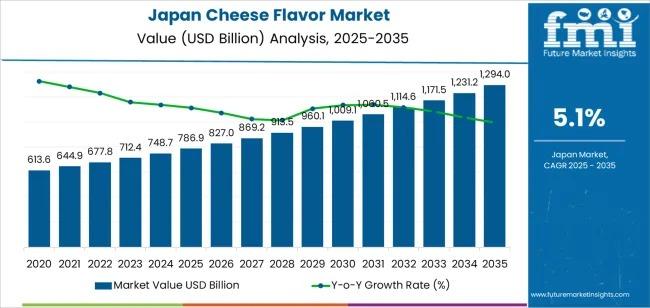
Japan's Cheese Flavor Demand to Surpass USD 1.29 Trillion by 2035, Driven by Sna …
The demand for cheese flavor in Japan is projected to expand from USD 786.9 billion in 2025 to USD 1,293.8 billion by 2035, advancing at a steady 5.1% CAGR. Growth is anchored in the rising use of cheese flavor systems across snack foods, processed meals, baked goods and seasoning blends-segments where authentic taste delivery and differentiation continue to shape product development strategies nationwide.
Japan's food manufacturing ecosystem is integrating more sophisticated…
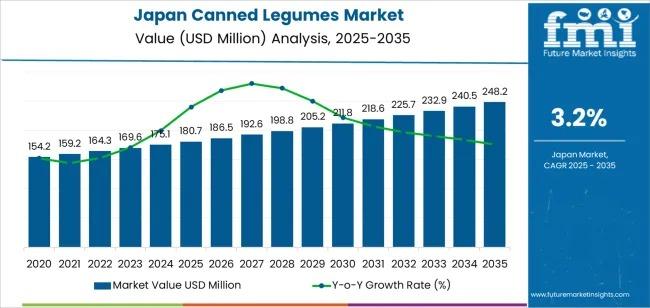
Japan's Canned Legumes Demand Set for Steady Growth, Expected to Reach USD 248.2 …
Japan's canned legumes demand is valued at USD 180.7 million in 2025 and is projected to reach USD 248.2 million by 2035, expanding at a 3.2% CAGR. Growth is driven by rising adoption of plant-based proteins, broader use of ready-to-cook ingredients, and strong preference for shelf-stable foods among urban and small households.
Consumption continues to increase as households incorporate canned chickpeas, beans, peas, and mixed legumes into salads, curries, simmered dishes,…
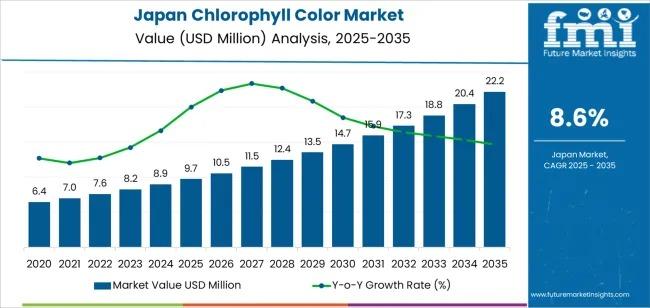
Japan's Demand for Chlorophyll Color Set to Reach USD 22.2 Billion by 2035 as Cl …
Japan's chlorophyll color industry is entering a decade of accelerated transformation, supported by stringent clean-label regulations, rising consumer scrutiny, and rapid reformulation activity across food and beverage categories. The market is valued at USD 9.7 billion in 2025 and is forecast to reach USD 22.2 billion by 2035, expanding at a strong 8.6% CAGR, underscoring its transition from niche natural colorant to a mainstream formulation priority for manufacturers nationwide.
This surge…
More Releases for Segetis
2029 Levulinic Acid Market: Global Size, Share, Demand and Ongoing Industry Tren …
Comprehensive Insights: Global Levulinic Acid Market Report, 2024-29
MarkNtel Advisors, a prominent market research firm, has recently published a report titled "Global Levulinic Acid Market: Industry Trends, Share, Size, Growth, Opportunity, and Forecast 2024-2029." This comprehensive study explores into the industry, offering an in-depth examination of the Levulinic Acid market, encompassing research findings, size, market share, trends, and growth projections.
Furthermore, the report encompasses competitor and regional analyses, spotlighting the most recent developments…
Bio-Based Levulinic Acid Market: Market Intelligence and Market Trends
New molecules developed by Segetis, in Minnesota based on esters of levulinic acid made from using bio based hydroxyl compounds and corn cobs are known as levulinic ketals. These can be used to produce a series of products such as plasticizers, polyols for polyurethane foams and solvents.
Segetis are constructing a new toll manufacturing plant for their new ketals chemistry in the Midwest and the construction of which was expected to…
Bio-Based Levulinic Acid Market : Recent Industry Trends and Projected Industry …
New molecules developed by Segetis, in Minnesota based on esters of levulinic acid made from using bio based hydroxyl compounds and corn cobs are known as levulinic ketals. These can be used to produce a series of products such as plasticizers, polyols for polyurethane foams and solvents.
Segetis are constructing a new toll manufacturing plant for their new ketals chemistry in the Midwest and the construction of which was expected to…
Prosperity of Industrialization to Drive Bio-Based Levulinic Acid Market During …
New molecules developed by Segetis, in Minnesota based on esters of levulinic acid made from using bio based hydroxyl compounds and corn cobs are known as levulinic ketals. These can be used to produce a series of products such as plasticizers, polyols for polyurethane foams and solvents.
Get Full Report Now @ https://www.futuremarketinsights.com/reports/bio-based-levulinic-acid-market
Segetis are constructing a new toll manufacturing plant for their new ketals chemistry in the Midwest and the construction…
Recent research: Bio-Based Levulinic Acid Market detailed analytical overview by …
New molecules developed by Segetis, in Minnesota based on esters of levulinic acid made from using bio based hydroxyl compounds and corn cobs are known as levulinic ketals. These can be used to produce a series of products such as plasticizers, polyols for polyurethane foams and solvents.
Request For Report Sample@ https://www.futuremarketinsights.com/reports/sample/rep-gb-227
Segetis are constructing a new toll manufacturing plant for their new ketals chemistry in the Midwest and the construction of…
Bio-Based Levulinic Acid Market Analysis, Segments, Growth and Value Chain 2014- …
New molecules developed by Segetis, in Minnesota based on esters of levulinic acid made from using bio based hydroxyl compounds and corn cobs are known as levulinic ketals. These can be used to produce a series of products such as plasticizers, polyols for polyurethane foams and solvents.
Segetis are constructing a new toll manufacturing plant for their new ketals chemistry in the Midwest and the construction of which was expected to…
