


Press release
Vibration Control Systems Market to Reach USD 10.8 Billion by 2035 Amid Expanding High-Tech Applications
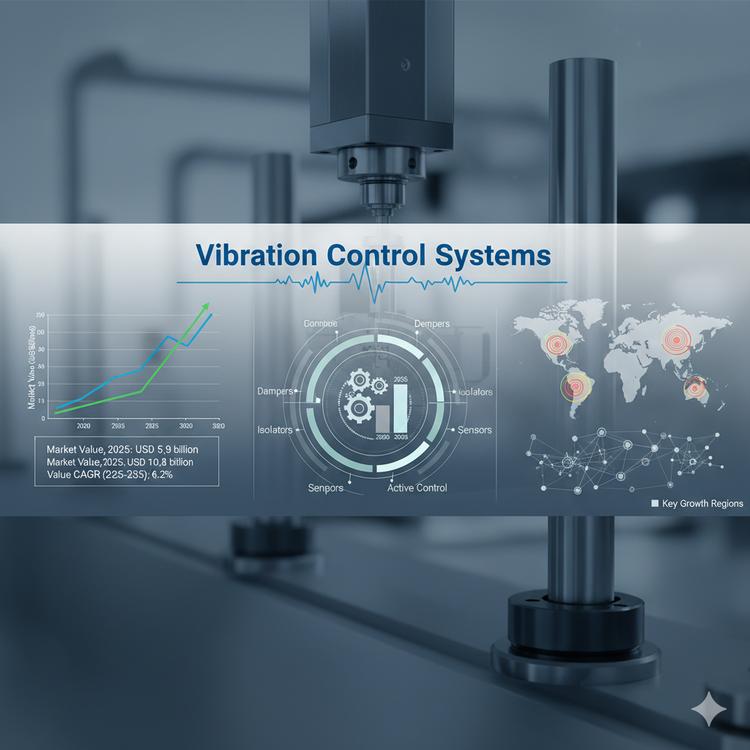
Vibration Control Systems
The sector, valued at USD 5.6 billion in 2024, is expected to exhibit a year-on-year growth of 5.8% in 2025. With an incremental opportunity of USD 4.9 billion projected over the forecast period, vibration control systems are positioned to play an increasingly critical role in sectors where even the slightest instability can compromise safety, efficiency, or product quality.
Full Market Report available for delivery. For purchase or customization, please request here: https://www.futuremarketinsights.com/reports/sample/rep-gb-4595
Innovation Driving Market Expansion
Vibration control systems are essential to industries such as aerospace, medical equipment, and chemicals, where high accuracy and stability are indispensable. The adoption of advanced materials and smart technologies has significantly enhanced performance, extending system life even under harsh operating conditions.
New technologies are paving the way for broader applications. Web-based continuous machine monitoring and Active Noise and Vibration Control (ANVC) systems in aircraft are examples of solutions redefining how industries manage vibration and noise. These innovations are particularly vital in environments where operational downtime can result in costly disruptions.
As industries push toward greater automation and higher precision, the demand for active vibration solutions is accelerating, with aerospace and automotive sectors at the forefront of adoption.
Semi-Annual Market Performance
Market performance trends reveal steady growth momentum. Between H1 2024 and H2 2035, CAGR variations indicate an upward trajectory, with rates expected to rise from 5.7% in the first half of the period to 6.5% in the later years. These patterns underscore consistent demand and the gradual strengthening of high-tech adoption across industries.
Key Industry Insights
In aerospace and defense, vibration control systems are vital for maintaining aircraft integrity, preventing windshield cracks, and protecting sensitive components. Passenger comfort and noise reduction have also emerged as critical factors, further boosting demand.
In the automotive industry, the focus on enhancing ride quality, reducing noise and vibration, and meeting stringent NVH standards has made vibration control systems indispensable. The shift toward electric and hybrid vehicles is creating new opportunities for real-time adaptive solutions that optimize comfort and safety.
The energy sector is another strong growth avenue. As renewable energy sources such as wind power expand, vibration control systems are critical for stabilizing turbines and ensuring long-term efficiency. Similarly, oil, gas, and utilities industries continue to adopt these systems to mitigate vibration-induced wear and extend the life of heavy machinery.
Regional Outlook
The United States remains a frontrunner, with an expected CAGR of 5.5% through 2035. Its growth is anchored in aerospace advancements, semiconductor manufacturing, and precision medical applications. Companies such as Moog Inc. are at the forefront of deploying smart sensors and advanced piezoelectric materials to push the boundaries of vibration management.
China is also poised for steady growth at 5.7% CAGR, driven by its automotive industry expansion and leadership in renewable energy, particularly wind power. Government-backed infrastructure modernization is further amplifying adoption.
In India, rapid progress in transportation infrastructure, such as the Mumbai-Ahmedabad bullet train project, alongside the expansion of domestic automotive production, is fueling demand for advanced vibration control solutions. The need for intelligent damping technologies in high-speed rail and automotive manufacturing positions India as a vibrant market for the future.
Industry Segmentation and Demand
Among system types, vibration controls hold a dominant share, projected to reach 44.6% by 2035. Their wide application in aerospace, automotive, and renewable energy highlights their importance in maintaining structural integrity and preventing mechanical failures.
By end user, the automotive industry represents the largest share, accounting for 14.6% of demand by 2035. The integration of vibration control in vehicle suspension systems, mounts, and active control solutions underscores its role in delivering superior passenger experiences and meeting global regulatory standards.
Request a Draft Report Here: https://www.futuremarketinsights.com/reports/brochure/rep-gb-4595
Competitive Landscape
The market features a mix of global leaders and dynamic emerging players. Tier 1 companies such as Brüel & Kjær Sound & Vibration Measurement, LORD Corporation, and MTS Systems capture a significant share due to their technological expertise and global reach. These companies continue to invest in high-tech series, integrating smart materials and compliance-focused designs.
At the same time, Tier 2 and local manufacturers are carving out niches by addressing region-specific needs and offering cost-efficient solutions. This dynamic is fostering innovation, as smaller firms experiment with specialized vibration isolators, dampers, and monitoring solutions that push the market into new territories.
Recent developments highlight the sector's momentum. Kinetic Noise Control Inc. launched its upgraded KSR 3.0 Vibration Isolation Rail in 2024, while Stabilus SE expanded its portfolio through the acquisition of DESTACO, reinforcing its position in automation and vibration management.
Future Outlook
Looking ahead, technological breakthroughs in nanomaterials, advanced composites, and smart monitoring will reshape the vibration control systems market. These innovations promise lighter, more durable solutions capable of delivering superior damping in critical sectors such as aerospace, medical, and renewable energy.
As industries continue to prioritize sustainability, efficiency, and safety, manufacturers both large and small are gearing up to meet evolving demands. The next decade will see vibration control systems move from being a supportive component to a central enabler of precision and resilience in global industries.
Related Reports:
Industrial Robots Market- https://www.futuremarketinsights.com/reports/industrial-robots-market
Glass Tempering System Market- https://www.futuremarketinsights.com/reports/glass-tempering-systems-market
Lamella Clarifier Market- https://www.futuremarketinsights.com/reports/lamella-clarifiers-market
About Future Market Insights (FMI)
Future Market Insights, Inc. (ESOMAR certified, recipient of the Stevie Award, and a member of the Greater New York Chamber of Commerce) offers profound insights into the driving factors that are boosting demand in the market. FMI stands as the leading global provider of market intelligence, advisory services, consulting, and events for the Packaging, Food and Beverage, Consumer Technology, Healthcare, Industrial, and Chemicals markets. With a vast team of over 400 analysts worldwide, FMI provides global, regional, and local expertise on diverse domains and industry trends across more than 110 countries.
Join us as we commemorate 10 years of delivering trusted market insights. Reflecting on a decade of achievements, we continue to lead with integrity, innovation, and expertise.
Contact Us:
Future Market Insights Inc.
Christiana Corporate, 200 Continental Drive,
Suite 401, Newark, Delaware - 19713, USA
T: +1-347-918-3531
For Sales Enquiries: sales@futuremarketinsights.com
Website: https://www.futuremarketinsights.com
LinkedIn| Twitter| Blogs | YouTube
This release was published on openPR.
Permanent link to this press release:
Copy
Please set a link in the press area of your homepage to this press release on openPR. openPR disclaims liability for any content contained in this release.
You can edit or delete your press release Vibration Control Systems Market to Reach USD 10.8 Billion by 2035 Amid Expanding High-Tech Applications here
News-ID: 4179495 • Views: …
More Releases from Future Market Insights
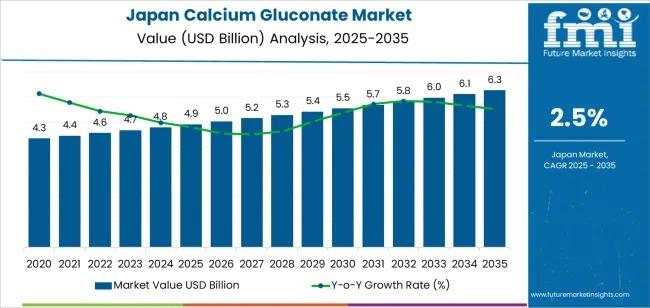
Japan's Calcium Gluconate Demand to Reach USD 6.3 Billion by 2035 Driven by Prev …
The demand for calcium gluconate in Japan is projected to rise from USD 4.9 billion in 2025 to USD 6.3 billion by 2035, registering a compound annual growth rate (CAGR) of 2.5%. Calcium gluconate, a calcium salt, is widely used across pharmaceutical and food industries, from intravenous treatments for calcium deficiencies to fortifying foods and beverages.
The growth is primarily driven by the increasing prevalence of calcium-related deficiencies and the expanding…
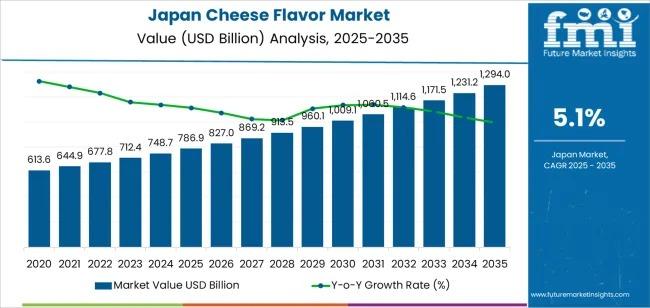
Japan's Cheese Flavor Demand to Surpass USD 1.29 Trillion by 2035, Driven by Sna …
The demand for cheese flavor in Japan is projected to expand from USD 786.9 billion in 2025 to USD 1,293.8 billion by 2035, advancing at a steady 5.1% CAGR. Growth is anchored in the rising use of cheese flavor systems across snack foods, processed meals, baked goods and seasoning blends-segments where authentic taste delivery and differentiation continue to shape product development strategies nationwide.
Japan's food manufacturing ecosystem is integrating more sophisticated…
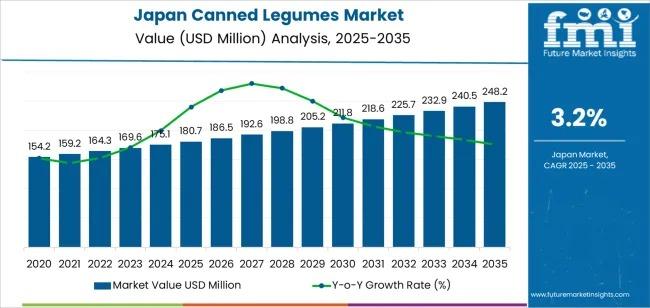
Japan's Canned Legumes Demand Set for Steady Growth, Expected to Reach USD 248.2 …
Japan's canned legumes demand is valued at USD 180.7 million in 2025 and is projected to reach USD 248.2 million by 2035, expanding at a 3.2% CAGR. Growth is driven by rising adoption of plant-based proteins, broader use of ready-to-cook ingredients, and strong preference for shelf-stable foods among urban and small households.
Consumption continues to increase as households incorporate canned chickpeas, beans, peas, and mixed legumes into salads, curries, simmered dishes,…
Japan's Demand for Chlorophyll Color Set to Reach USD 22.2 Billion by 2035 as Cl …
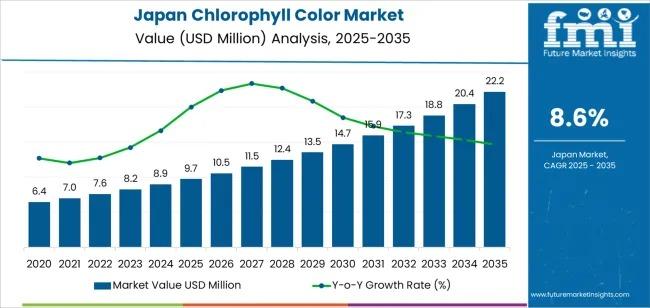
Japan's chlorophyll color industry is entering a decade of accelerated transformation, supported by stringent clean-label regulations, rising consumer scrutiny, and rapid reformulation activity across food and beverage categories. The market is valued at USD 9.7 billion in 2025 and is forecast to reach USD 22.2 billion by 2035, expanding at a strong 8.6% CAGR, underscoring its transition from niche natural colorant to a mainstream formulation priority for manufacturers nationwide.
This surge…
More Releases for Vibration
Global Vibration Platform Market Size by Application, Type, and Geography: Forec …
According to Market Research Intellect, the global Vibration Platform market under the Internet, Communication and Technology category is expected to register notable growth from 2025 to 2032. Key drivers such as advancing technologies, changing consumer behavior, and evolving market dynamics are poised to shape the trajectory of this market throughout the forecast period.
The market for vibration platforms is expanding steadily due to rising interest in health, fitness, and rehabilitation technologies.…
Basic knowledge of motor vibration and the causes of large motor vibration
1. What are the calculation units of motor vibration value? How to understand these units?
The commonly used measurement units of motor vibration value are speed effective value (referred to as speed), vibration amplitude value (referred to as amplitude, divided into single amplitude and double amplitude) and vibration acceleration. The first one is used more.
"Speed effective value" can be simply understood as the distance moved by the vibrating material (which can…
Prominent Vibration Sensor Market Trend for 2025: Rising Technological Advanceme …
What industry-specific factors are fueling the growth of the vibration sensor market?
The expansion of the aviation sector is anticipated to fuel the vibration sensor market's growth. Vibration analysis in aircraft engines is utilized to check vibration levels and ensure the lack of cracks, functioning avionics, and overall engine performance. For example, Eurostat, a European intergovernmental statistical organization, reported in September 2024 that the air travel in the EU for 2022…
Rising Need for Noise & Vibration Reduction in Vehicles Driving Demand for Autom …
250 Pages of Research Study Published by Fact.MR, a Leading Market Research and Competitive Intelligence Provider Offers Riveting Insights into Key Factors Accelerating the Growth of the Global Automotive Vibration Absorber Market over the Assessment Period 2021-2031
The vibration control industry manufactures automotive vibration absorbers used in suspension components for reducing noise and vibration in automobiles, engines, powertrains, and other machine constructions. As suspension systems play vital role in maintaining safety and comfort…
Vibration Monitoring Equipment Market expects vibration measurement to rise as a …
The Vibration Monitoring Equipment Market deals with the development, manufacture and distribution of vibration measuring instruments. The process of monitoring and measuring the condition of a machine according to various parameters is called condition monitoring. One such parameter under condition monitoring is vibration measurement.
The vibration measuring instruments are utilized in major industries for the safety and proactive maintenance of the respective equipment. A vibration measurement instrument has the ability to…
Measuring Bearing Vibration Levels
Data Acquisition Systems for Fault Diagnosis & Condition Monitoring
The diagnosis of bearing damage in roller bearings is an integral part of servicing and maintenance tasks. Increasingly, technicians rely on condition monitoring systems (CMS) for machine diagnoses in plants and factories. Many CMS systems are based on vibration measurements. Two contrasting approaches exist: the diagnostic, qualitative approach (producing an envelope spectrum); and the quantitative approach (measuring vibration velocity).
Delphin Expert Vibro…
