


Press release
Genetically Modified Foods Market size and Key Trends in terms of volume and value 2015-2025

Genetically Modified Foods: Drivers and Restraints
The major factors driving the genetically modified food market are high nutritional content in the food, high production quantity and less requirement of pesticides. However, damage to beneficial insects and soil fertility coupled with genetic pollution, absence of any centralized government regulation and lack of awareness about the benefits of GMO are factors which are restraining the market potential growth. Rising demand for healthy food products, year round and easy availability of genetically modified food are main trends in the genetically modified food market globally.
Request Report Sample@ http://www.futuremarketinsights.com/reports/sample/rep-gb-889
Genetically Modified Foods: Segmentation
Genetically modified food market is segmented on the basis of type and region. On the basis of type genetically modified food is segmented into crops, vegetables, fruits and animal products. Corn and Soya are widely cultivated in genetically modified form as compared to other crops in the US. Furthermore, on the basis of region the market is segmented into North America, Latin America, Western Europe, Eastern Europe, Asia Pacific, Japan and Middle East and Africa.
Genetically Modified Foods: Key Players
Major players operating in this category are Monsanto US, DuPont US, Syngenta Switzerland, Bayer Crop Science Germany, Sakata Japan, BASF Gmbh, Group Limagrain France to name a few. The global players are focused on partnership and collaboration with other companies in order to increase its product portfolio, industry offering and global presence. The global giant in genetically modified food are actively involved in collaboration with the Advanced Research Institutes (ARIs) in the industrial countries such as Brazil, Argentina, China, India, Malaysia and the Philippines for significant R&D program in biotechnology and transgenic crops. Companies are also increasing their R&D in some of the African countries such as South Africa, Kenya, Zimbabwe, Mali, Nigeria, Egypt and Uganda in order to cater the growing demand for genetically modified food in Africa
Visit For TOC@ http://www.futuremarketinsights.com/toc/rep-gb-889
Genetically Modified Foods: Regional Outlook
In 2014, North America was the largest market for genetically modified food and likely to remain as market leader in terms of revenue during the forecast period. China and India are the major countries in Asia-Pacific which is expected to emerge as major market for genetically modified food market. Also, other developing countries such as Brazil is anticipated to growth at a robust CAGR over the forecast period. The US government is focused towards the safety of GM products. The industry is regulated by the Department of Agriculture, for farm biotechnology, and the Food and Drug Administration, which governs food and its ingredients. The developers of the genetically modified food products are intensely involved in certifying their safety. For instance, FDA depends on a consultative process with developers who voluntarily present their plans to the agency before marketing the products
About Us – Future Market Insights is the premier provider of market intelligence and consulting services, serving clients in over 150 countries. FMI is headquartered in London, the global financial capital, and has delivery centers in the U.S. and India.
CONTACT:
616 Corporate Way, Suite 2-9018,
Valley Cottage, NY 10989,
United States
T: +1-347-918-3531
F: +1-845-579-5705
Email: sales@futuremarketinsights.com
Website: www.futuremarketinsights.com
This release was published on openPR.
Permanent link to this press release:
Copy
Please set a link in the press area of your homepage to this press release on openPR. openPR disclaims liability for any content contained in this release.
You can edit or delete your press release Genetically Modified Foods Market size and Key Trends in terms of volume and value 2015-2025 here
News-ID: 680752 • Views: …
More Releases from Future Market Insights
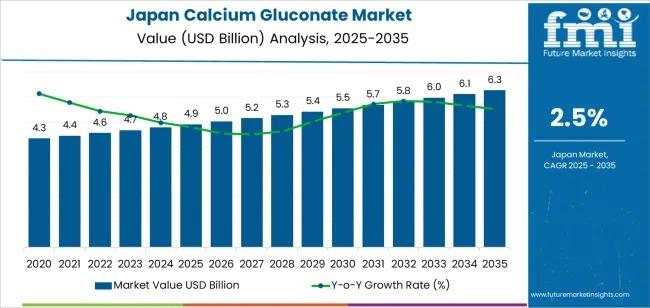
Japan's Calcium Gluconate Demand to Reach USD 6.3 Billion by 2035 Driven by Prev …
The demand for calcium gluconate in Japan is projected to rise from USD 4.9 billion in 2025 to USD 6.3 billion by 2035, registering a compound annual growth rate (CAGR) of 2.5%. Calcium gluconate, a calcium salt, is widely used across pharmaceutical and food industries, from intravenous treatments for calcium deficiencies to fortifying foods and beverages.
The growth is primarily driven by the increasing prevalence of calcium-related deficiencies and the expanding…
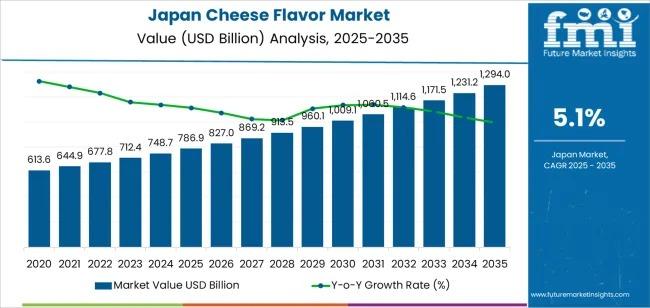
Japan's Cheese Flavor Demand to Surpass USD 1.29 Trillion by 2035, Driven by Sna …
The demand for cheese flavor in Japan is projected to expand from USD 786.9 billion in 2025 to USD 1,293.8 billion by 2035, advancing at a steady 5.1% CAGR. Growth is anchored in the rising use of cheese flavor systems across snack foods, processed meals, baked goods and seasoning blends-segments where authentic taste delivery and differentiation continue to shape product development strategies nationwide.
Japan's food manufacturing ecosystem is integrating more sophisticated…
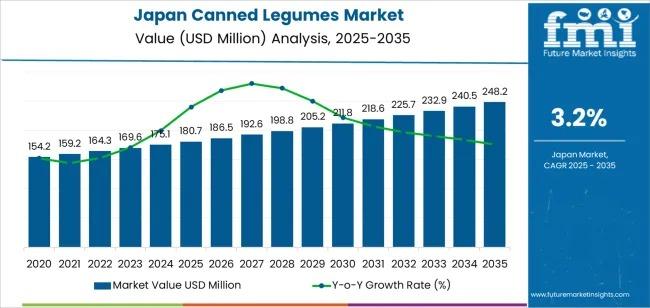
Japan's Canned Legumes Demand Set for Steady Growth, Expected to Reach USD 248.2 …
Japan's canned legumes demand is valued at USD 180.7 million in 2025 and is projected to reach USD 248.2 million by 2035, expanding at a 3.2% CAGR. Growth is driven by rising adoption of plant-based proteins, broader use of ready-to-cook ingredients, and strong preference for shelf-stable foods among urban and small households.
Consumption continues to increase as households incorporate canned chickpeas, beans, peas, and mixed legumes into salads, curries, simmered dishes,…
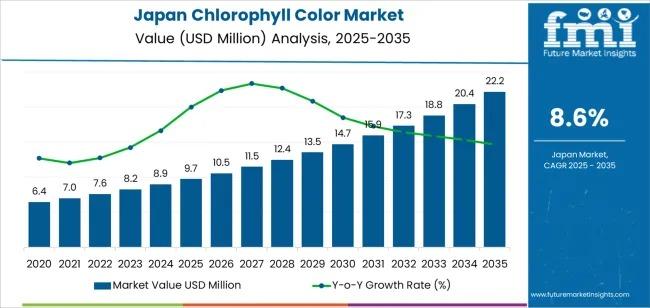
Japan's Demand for Chlorophyll Color Set to Reach USD 22.2 Billion by 2035 as Cl …
Japan's chlorophyll color industry is entering a decade of accelerated transformation, supported by stringent clean-label regulations, rising consumer scrutiny, and rapid reformulation activity across food and beverage categories. The market is valued at USD 9.7 billion in 2025 and is forecast to reach USD 22.2 billion by 2035, expanding at a strong 8.6% CAGR, underscoring its transition from niche natural colorant to a mainstream formulation priority for manufacturers nationwide.
This surge…
More Releases for Genetically
Transformative Trends Impacting the Genetically Modified Vegetables Market Lands …
"Stay ahead with our updated market reports featuring the latest on tariffs, trade flows, and supply chain transformations.
How Large Will the Genetically Modified Vegetables Market Size By 2025?
The market size of genetically modified vegetables has seen a swift expansion in the past few years. The market is forecasted to increase from $0.12 billion in 2024 to $0.13 billion in 2025, experiencing a compound annual growth rate (CAGR) of 12.2%. The…
Genetically Modified Feed Market Cultivating a Stronger Future: The Expanding Ma …
Genetically Modified Feed Market to reach over USD 157.71 billion by the year 2031 - Exclusive Report by InsightAce Analytic.
"Genetically Modified Feed Market" in terms of revenue was estimated to be worth $95.29 billion in 2023 and is poised to reach $157.71 billion by 2031, growing at a CAGR of 6.69% from 2024 to 2031 according to a new report by InsightAce Analytic.
Get Free Sample Report @ https://www.insightaceanalytic.com/request-sample/1463
…
Synthetic Spider Silk Market Report 2018: Segmentation by Type (Genetically Modi …
Global Synthetic Spider Silk market research report provides company profile for Spiber, AMSilk, Bolt Threads, Kraig Biocraft Laboratories and Others.
This market study includes data about consumer perspective, comprehensive analysis, statistics, market share, company performances (Stocks), historical analysis 2012 to 2017, market forecast 2018 to 2025 in terms of volume, revenue, YOY growth rate, and CAGR for the year 2018 to 2025, etc. The report also provides detailed segmentation on…
United States Genetically Modified Seeds Market Report 2017
Summary
This report studies sales (consumption) of Genetically Modified Seeds in United States market, focuses on the top players, with sales, price, revenue and market share for each player, covering
Bayer CropScience
Dow
DuPont
Groupe Limagrain
Monsanto
Syngenta
BASF
DLF Seeds and Science
Kleinwanzlebener Saatzuch SAAT SE
Land O’Lakes
Sakata Seed
Takii Seed
Market Segment by States, covering
California
Texas
New York
Florida
Illinois
Split by product types, with sales, revenue, price, market share and growth rate of each type, can be divided into
Type I
Type II
Split by applications, this report…
Genetically Modified Organisms Market - Global Industry Analysis 2023
Any organism whose genetic material has been modified using genetic engineering technique in laboratory is referred as genetically modified organism (GMO). Genetic modification of genetic material is practiced for production of specific biological product or for expression of specific physiological traits in an organism. Genetically modified organisms are produced using reproductive cloning and recombinant deoxyribonucleic acid (DNA) technology. Transfer of entire donor nucleus into enucleated cytoplasm of host egg result…
Genetically Modified Organisms Market Value Chain Analysis 2020
Genetic engineering is the science for cloning or manipulating DNAs or genes to create new characteristic in organism or produce protein or hormone. Genetic engineering is mostly used for generating recombinant DNA and is done by inserting desired trait gene or by deletion or mutating gene in cell or virus known as vector. Genetically engineered plants, animals or microbes are called as genetically modified organisms.
Increased productivity due to genetically modified…
